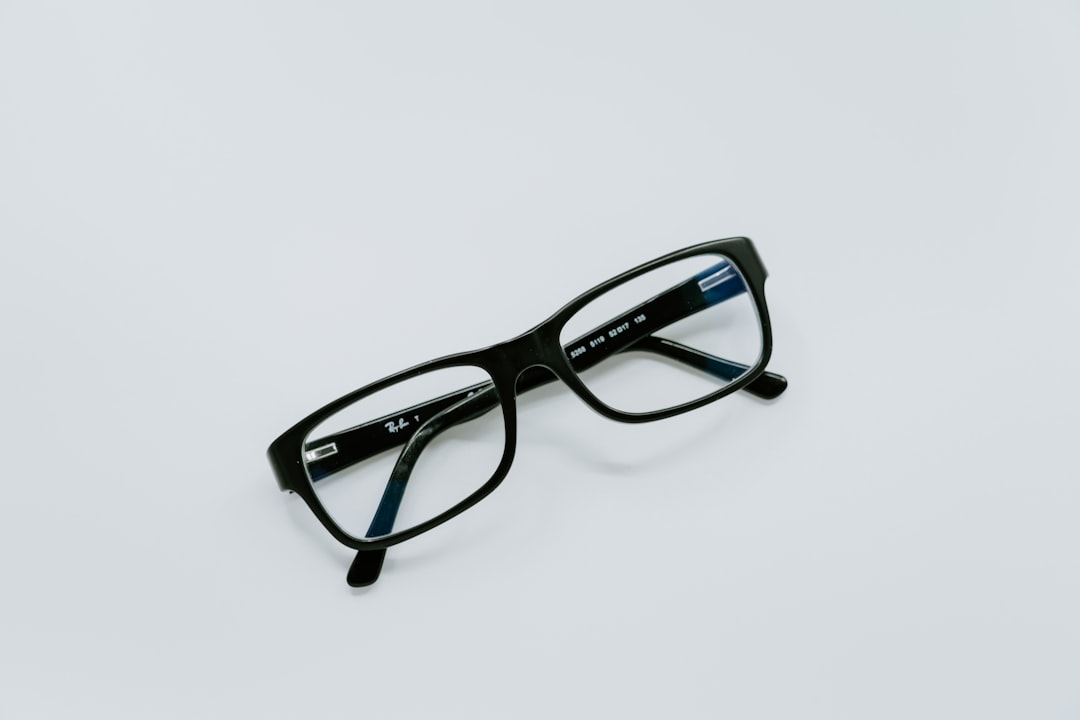
Your eyeglass prescription is a set of measurements, not a recommendation for a particular frame or lens brand. This guide explains how to read SPH, CYL, axis, ADD, and PD, then gives you a simple way to compare an old prescription with a new one before ordering prescription glasses, custom lenses, or prescription sunglasses.
Overview
An eyeglass prescription usually lists separate values for the right eye and left eye. The right eye may be labeled OD (oculus dexter), while the left eye may be labeled OS (oculus sinister). Some prescriptions use plain-language labels such as “right” and “left.” A prescription may also include a prescription type, such as single vision, bifocal, or progressive.
Here is a simplified example:
| Eye | SPH | CYL | Axis | ADD |
|---|---|---|---|---|
| OD (right) | -2.00 | -0.75 | 180 | +1.50 |
| OS (left) | -1.75 | -0.50 | 170 | +1.50 |
This example is for explanation only. It is not a prescription to use for ordering glasses. The numbers must be read together, and a dispensing professional may need additional measurements before lenses can be made accurately.
It also helps to separate the prescription from other parts of an eyewear order. Your prescription describes the optical correction. Frame measurements, lens material, pupillary distance, fitting height, and design choices affect how that correction is positioned and delivered in the finished glasses.
What to track
SPH: the basic focusing power
SPH, or sphere, indicates the main lens power needed to correct focusing. A minus sign generally indicates correction for nearsightedness, also called myopia. A plus sign generally indicates correction for farsightedness, also called hyperopia. The number shows the strength of that power, usually in diopters.
Do not assume that a larger number automatically means a serious eye problem. SPH is one part of a prescription and should be interpreted by an eye-care professional alongside your examination results and symptoms.
CYL: correction for astigmatism
CYL, or cylinder, records the additional power used to correct astigmatism. It may be written with a plus or minus sign, depending on the format used by the prescribing professional or optical store. A blank, “DS,” or “SPH” in this field may indicate that no cylinder correction was prescribed, but confirm the notation if it is unclear.
Axis: the direction of cylinder correction
Axis is paired with CYL. It indicates the orientation of the cylinder correction on a scale from 1 to 180 degrees. Axis is not a measure of how strong the prescription is. A cylinder value without its corresponding axis is incomplete for ordering lenses.
ADD: extra power for near vision
ADD is an additional plus power for close work. It commonly appears on prescriptions for bifocal, trifocal, or progressive lenses, and it may be the same for both eyes or listed separately. The ADD value is added to the distance prescription when the near portion of the lens is calculated.
A prescription with an ADD does not necessarily tell you which progressive lens design is best. Lens design, corridor length, frame shape, working distance, and fitting measurements can all affect the result. For more context, see our guide to progressive lens design, corridors, and add-ons.
PD: pupillary distance
PD, or pupillary distance, measures the distance between the centers of your pupils. It may be recorded as one total measurement, such as a binocular PD, or as two separate measurements, such as right and left monocular PDs. Monocular measurements can be useful when the pupils are not perfectly centered relative to the nose or face.
PD is important because it helps position each lens in front of the appropriate eye. It may be printed on the prescription, supplied separately, measured by an optician, or requested by an online eyewear seller. Do not guess it from an old pair of glasses. If the measurement is missing, ask the prescribing practice or an optician how it can be obtained.
Other fields and notes
You may also see notes for prism, base direction, visual acuity, tint, or special-use prescriptions. Prism can be clinically important and should not be omitted from an order. A prescription may also state “distance,” “intermediate,” or “near,” which identifies the intended viewing range. If any abbreviation is illegible or unfamiliar, ask the practice that issued it rather than interpreting it from a product page.
Cadence and checkpoints
Use a short prescription-check routine whenever you receive new eye-care paperwork or prepare to replace lenses:
- Confirm the patient details. Check your name, the examination date, and whether the document is for glasses, contact lenses, or another purpose.
- Separate the eyes. Match OD or right-eye values with the right eye, and OS or left-eye values with the left eye. Avoid copying both sides from a single row.
- Check every applicable field. Compare SPH, CYL, axis, ADD, prism, and any written notes. A missing value may be intentional, but it should not be silently filled in.
- Verify the PD requirement. Determine whether the seller needs a single PD or right-and-left measurements. Ask an optician if the prescription does not include it.
- Compare the new and old prescriptions side by side. Record changes rather than relying on memory. Note whether a difference affects distance power, astigmatism, near power, or only the measurement format.
- Match the lens type to your use. A single-vision prescription is not automatically interchangeable with a progressive or occupational design. Tell the optician how and where you use your glasses.
- Review the final order. Before confirming, check the eye labels, values, lens type, material, coatings, and requested measurements against the paperwork.
Prescription validity is not universal. It can depend on the jurisdiction, the issuing professional, and the type of prescription. Rather than relying on a general time period, check the expiration or issue information on your document and confirm with the prescribing practice or eyewear store before ordering.
How to interpret changes
A change in SPH may affect distance or near clarity, while a change in CYL or axis may alter how astigmatism is corrected. A new ADD can affect reading comfort or the balance between distance and near vision. Even a small numerical change may feel noticeable, but the experience depends on the size of the change, the lens design, the frame, and how consistently the glasses are worn.
Prescription notation can also change without representing a completely different correction. For example, an optical professional may convert a prescription between plus-cylinder and minus-cylinder formats. In that situation, SPH, CYL, and axis all change according to the conversion, while the underlying correction may be equivalent. Do not compare one field in isolation or assume that every changed number means your vision changed by the same amount.
When replacing glasses, also track non-prescription variables. A different frame size can change lens positioning. A progressive lens may require accurate fitting heights. High-index lenses, anti-reflective coating, photochromic treatment, and polarized prescription sunglasses address different needs and should be selected separately from the prescription power. Our guide to prescription lens options can help you compare those choices.
If new glasses cause persistent blur, headaches, double vision, eye strain, or difficulty adapting, stop treating the issue as a simple number comparison. Have the glasses checked for the prescription, lens positioning, frame adjustment, and manufacturing accuracy. An eyewear fitting and adjustment appointment may identify a fit problem, while ongoing or concerning symptoms warrant advice from an eye-care professional.
When to revisit
Revisit this guide whenever you receive a new prescription, order replacement lenses, change from single vision to progressive lenses, or buy prescription sunglasses. It is also useful before submitting an online order, especially when your PD is listed separately or your prescription includes prism, ADD, or other special instructions.
A monthly check is unnecessary for most people unless an eye-care professional has given you a specific monitoring plan. A practical cadence is to keep a prescription record and review it at each eye examination or whenever you notice a meaningful change in vision. Refresh your order checklist quarterly if you regularly manage glasses for a child, caregiver, or household member, because paperwork and frame needs can change more often than your own.
Before your next purchase, save a clear copy of the current prescription, write down your preferred frame dimensions, and record whether your existing lenses are single vision, progressive, tinted, photochromic, or polarized. Then ask an optician to confirm the measurements and lens design before production. If you are searching for an optician near you, bring both your current glasses and the prescription so the professional can assess the paperwork and the fit together.
The safest rule is simple: use your prescription as a technical reference, not as a substitute for professional interpretation. When the numbers, measurements, or lens purpose are unclear, pause the order and verify them before your custom lenses are made.